
In the AI Appliance Era, the Control Board Is the Experience
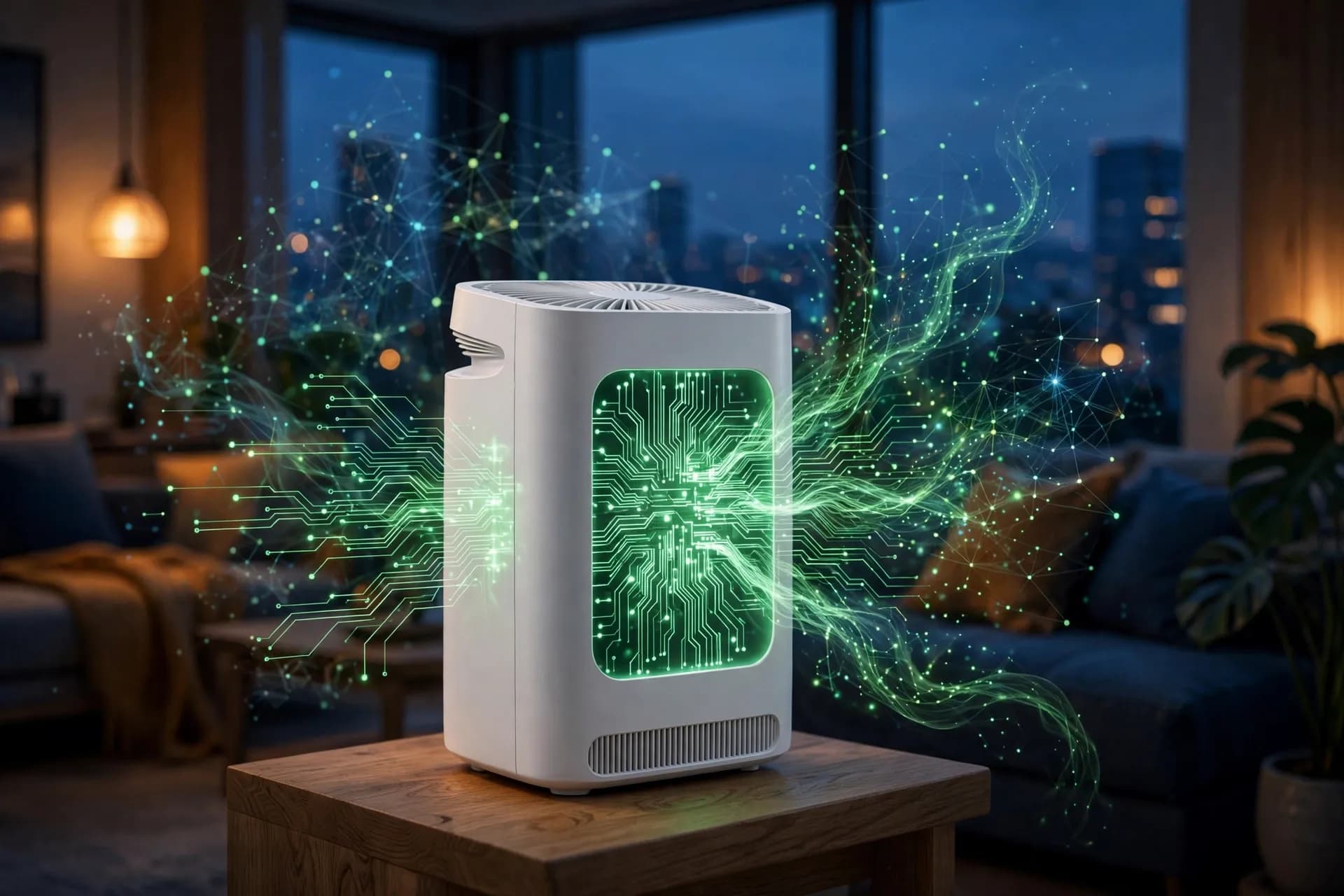
AI is pushing small appliances from passive control to proactive service, making the control board the heart of the experience. Trends, policies, market data and buying advice.
From "Obedient" to "Understanding": The Third Phase of Appliance Intelligence
Appliance intelligence has gone through three phases: standalone smart devices — smart speakers, robot vacuums — that got connected and phone-controlled; interconnected scenarios where whole-home setups let devices talk to each other; and now “proactive intelligence” — large models and on-device AI turning devices from passive responders into active understanders. The competitive focus is shifting from “how many devices are connected” to “whose product truly fits into daily life.”
The old logic was “humans command devices, and obedience is intelligence.” The new logic: “devices understand humans, and proactive service is intelligence.” Buying criteria are moving from specs and prices to experience, ecosystem and AI capability.
Standards First: AI Small Appliances Get Their First Ruler
At AWE 2026 in March, Haier Small Appliances and the China Household Electric Appliance Research Institute released the industry’s first “AI smart garment steamer standard,” reshaping intelligent interaction through underlying technological innovation. Haier’s approach is a trinity of algorithm, hardware and data: algorithms covering sensing to execution, hardware as the physical foundation, and data driving continuous model improvement — products that “understand you better the more you use them.”
The standard matters because it gives AI small appliances their first measurable, workable yardstick, moving the industry from experience-driven to data-driven and intelligence-led.
Policy Tailwind: Smart Home Written Into Official Documents
In June 2026, eight departments including the Ministry of Commerce issued the “Implementation Opinions on Accelerating AI + Consumption,” explicitly promoting smart home appliances, smart kitchens and bathrooms, and smart lighting, pushing home appliance upgrades.
The signal is clear: smart appliances are not a concept — they are the consumption theme for the next few years. The market agrees: DataInsightsMarket estimates the intelligent home-appliance controller market at about US$18.5 billion in 2025, rising to US$20.7 billion in 2026.
What It Means for Control Boards: Four New Tests
When “intelligence” moves from app-based remote control to proactive understanding, the control board stops being an executor and becomes the heart of the experience. Four new tests follow:
First, on-device sensing and compute. Recognizing fabrics or learning user habits has to happen on the device in real time. Boards need more sensors and headroom for local inference.
Second, OTA and continuous evolution. “Understanding you better over time” requires a hardware architecture that supports ongoing upgrades — a one-shot board design won’t carry years of iteration.
Third, energy efficiency and thermal design. More compute means more power draw and heat; power design and thermal management become hard requirements.
Fourth, data and security. Connected devices collect user data, making privacy compliance and baseline security a must for export markets.
Advice for Buyers: Three Things to Check in a PCBA Supplier
Borrowing the algorithm-hardware-data trinity, buyers evaluating control board suppliers should look at three things:
Solution fit — can they translate algorithm requirements into board-level design;
Hardware iteration speed — can they keep up with yearly smart-feature cycles;
Mass-production consistency — between a lab demo and 100,000 stable units lies engineering discipline.
Closing
AI is rewriting small appliances, and the first thing it rewrites is the definition of the control board: from “making functions work” to “making the experience reliable.” Whoever grasps this first moves first in the next buying cycle.
For custom AI appliance control boards, contact us through the website.
Sources: Senn.com.cn, “从被动控制到主动服务 AI家电正在改写行业底层逻辑” (Sep 17, 2026); China Business News on Haier at AWE 2026 (Mar 13, 2026); Sina Tech (Jun 30, 2026) and NetEase (Jun 18, 2026) on the AI + Consumption implementation opinions; DataInsightsMarket, “Intelligent Controller for Home Appliance Industry Dynamics” (market sizing).